Forum 2026

A results-oriented and strategic cooperation platform based on the principle of “From discussion to commitment, from contact to collaboration”.

Attention !!! This concept and programme are currently a proposal
and must be fully developed and approved through discussions!
DRAFT

Date and venue

When and where

Date
December 2026
Venue
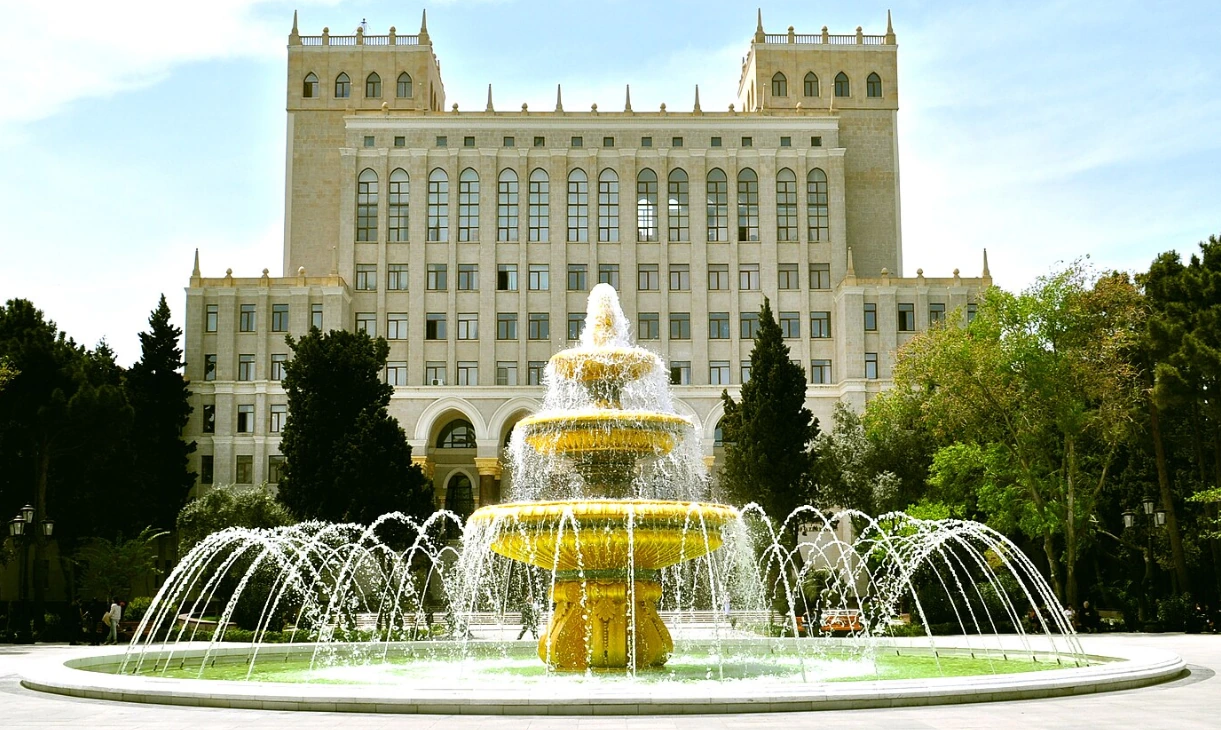
Presidium building of the Azerbaijan National Academy of Sciences (Ismailiyya building).
Baku, Sabail district, Istiqlaliyyat Street 10
I. Concept

Strategic rationale and objectives

1. Rationale

The First Forum held in 2024 was an important milestone in identifying the potential of Azerbaijani scientists living abroad and establishing initial contacts. In the period that followed, online meetings were held between the Executive Board and members of the World Association of Azerbaijani Scientists (WAAS) and the majority of universities that participated in the First Forum; priority directions were defined and coordinators were appointed for their implementation. The Second Forum aims, as the logical continuation of this process, to move cooperation to an institutional and strategic stage.

2. Main purpose of the Forum

  • Systematic integration of the knowledge and experience of Azerbaijani scientists working abroad into Azerbaijan’s science and education environment;
  • Transformation of existing contacts into concrete projects;
  • Establishment of long-term partnerships with universities and scientific institutions.

3. Strategic approach

The principle underpinning the Second Forum: a transition “From discussion to commitment, from contact to collaboration”.

4. Strategic goals

  • Agreement on concrete cooperation projects;
  • Development of cooperation projects by university;
  • Identification of responsible persons for each project;
  • Preparation of implementation plans;
  • Formation of a sustainable operating mechanism that ensures the participation of diaspora scientists.

5. Participants

WAAS members
Leadership and representatives of Azerbaijani universities
Azerbaijan National Academy of Sciences
Ministry of Science and Education of the Republic of Azerbaijan
State Committee on Diaspora Affairs of the Republic of Azerbaijan

6. Structure of the Forum

Day 1 — Transition to the strategic stage
  • Identification of discussion topics;
  • Formation of working groups and commencement of their activities.
Day 2 — Practical cooperation
  • Working meetings with representatives of universities and ANAS;
  • Specification and agreement of projects.

7. Expected outcomes

  • Concrete projects and cooperation documents;
  • Formation of a coordinator network;
  • A long-term cooperation model.

8. Conclusion

The main distinguishing feature of the Second Forum is that it is a cooperation platform focused on practical outcomes.

II. Daily programme

Agenda

Day 1 09:00–17:00

Objective of the day: identification of discussion topics and organisation of joint working discussions around those topics with representatives of universities and ANAS (main driving force). Topics are determined on the basis of directions reflected in cooperation memoranda or conceptual topics (Notes section, items A–F).

09:00–10:15
Visit to the Heydar Aliyev Memorial and Alley of Martyrs
10:15–11:00
Registration of participants
11:00–13:00
Protocol addresses
  • Report address by Professor Mesud Afandiyev, Chair of the WAAS Executive Board:
    • Brief presentation of WAAS members awarded the “Tərəqqi” medal by Presidential decree in January 2026;
    • Presentation on WAAS activities in 2024–2026.
  • Address by Fuad Muradov, Chair of the State Committee on Diaspora Affairs;
  • Address by Emin Amrullayev, Minister of Science and Education;
  • Address by Academician Isa Habibbayli, President of ANAS;
  • Addresses by university rectors who held online meetings with WAAS and signed memoranda.
13:00–14:00
Lunch break
14:00–17:00
Discussions
15:15–15:45 — tea/coffee break
Outcome of the day: formation of initial project ideas.

Day 2 10:00–17:00

Objective of the day: continuation of meetings with university and ANAS representatives (main driving force), detailing of concrete projects, and preparation of cooperation agreements.

10:00–13:00
Discussions
11:15–11:45 — tea/coffee break
13:00–14:00
Lunch break
14:00–16:00
Discussions
15:15–15:45 — tea/coffee break
16:00–17:00
Finalisation and presentation of outcomes
19:00
Official banquet
Outcome of the day:
  • Concrete projects;
  • Responsible persons;
  • Implementation plans.
III. Notes

Alternative venue and choice of discussion model

Alternative venue

It would be more appropriate to hold the Forum in the building of ANAS located on Huseyn Javid Avenue. This venue is close to the Heydar Aliyev Memorial and the Alley of Martyrs, as well as to BSU, ATU and the institutes of ANAS. Given the traffic congestion in Baku, the need for participants to move from venue to venue is greatly reduced, thereby minimising loss of time.

Discussion model

Unlike the First Forum, it is recommended that joint discussions involve not only WAAS members but also up to twenty key leading staff members (driving force) of each rector and the President of ANAS. This approach will help organise discussions in a more purposeful and results-oriented manner.

Joint discussions are envisaged to take place around tables formed in mixed composition of participants from different specialisations — local specialists and WAAS members — on pre-defined conceptual topics.

Attention! The topics presented below are for illustrative purposes only. Alternative topics may be defined if necessary. It is advisable for members of the Executive Board, as well as representatives of universities and ANAS, to submit their own proposals on conceptual topics.

Conceptual topics

Topics in brief

A. Digital technologies and intelligent systems
Development of artificial intelligence, data science and intelligent infrastructure.
B. Education and academic development
Modernisation of the education system and strengthening the international competitiveness of universities.
C. Health and life sciences
Biomedical research, health information systems and advances in genomics.
D. Energy and the environment
Green energy, sustainable development and ecological restoration.
E. Culture and language technologies
Digital heritage, language resources and development of scientific-cultural platforms.
F. Science policy and funding
Research funding, institutional mechanisms and integration of diaspora potential.
Conceptual topics

Topics in detail

A. Digital technologies and intelligent systems

Development of artificial intelligence, data science and intelligent infrastructure; big data analytics; cloud and high-performance computing; digital twins; 5G/6G and future communication technologies; smart city and smart village concepts; IoT and Industry 4.0 solutions; readiness for quantum technologies; cybersecurity and national digital resilience.

B. Education and academic development

Modernisation of the education system; global ranking strategies for universities; digital education and hybrid learning models; AI-supported personalised learning; lifelong learning and micro-credentials; development of academic leadership; international dual-degree and joint programmes; establishment of a research-oriented university model; scientific ethics standards and open science policies.

C. Health and life sciences

Biomedical research and genomics; national health information systems and e-health; personalised medicine; AI-based diagnostics; bioinformatics and biotechnology; drug research and clinical trial infrastructure; public health and epidemiological modelling; medical innovations for an ageing population; digital health and telemedicine.

D. Energy and the environment

Green energy strategies; renewable energy sources; energy storage technologies; smart-grid systems; climate change mitigation and adaptation; carbon neutrality policies; water resource management; circular economy; ecological restoration of war-affected areas; sustainable urbanisation and environmental monitoring.

E. Culture, language and digital heritage

Digital culture platforms; digitisation of national heritage; AI-based language technologies; mass translation systems; digital humanities; promotion of global Azerbaijani culture; media and information literacy; creative industries and the cultural economy; virtual museums and augmented reality applications.

F. Science policy, funding and diaspora integration

Establishment of a national science fund and international models; innovation and start-up ecosystems; technology transfer and industry–university cooperation; grant mechanisms and joint international projects; science diplomacy and international networking; systematic integration of diaspora scientists; brain-drain prevention and return programmes; intellectual property rights and digital legal frameworks; evidence-based decision-making in science governance.
Logistics

Final session and coordination

Holding the final session with the participation of all groups in the same venue is one of the key conditions for increasing the effectiveness of the Forum and presenting adopted decisions in a unified manner.

Redirecting participants to university or ANAS premises may cause additional loss of time. Therefore, a more efficient approach is considered to be for WAAS members and local partners — the main driving force groups — to continue all discussions at the venue where the Forum is held. This approach helps simplify logistics and strengthen coordination among working groups.